
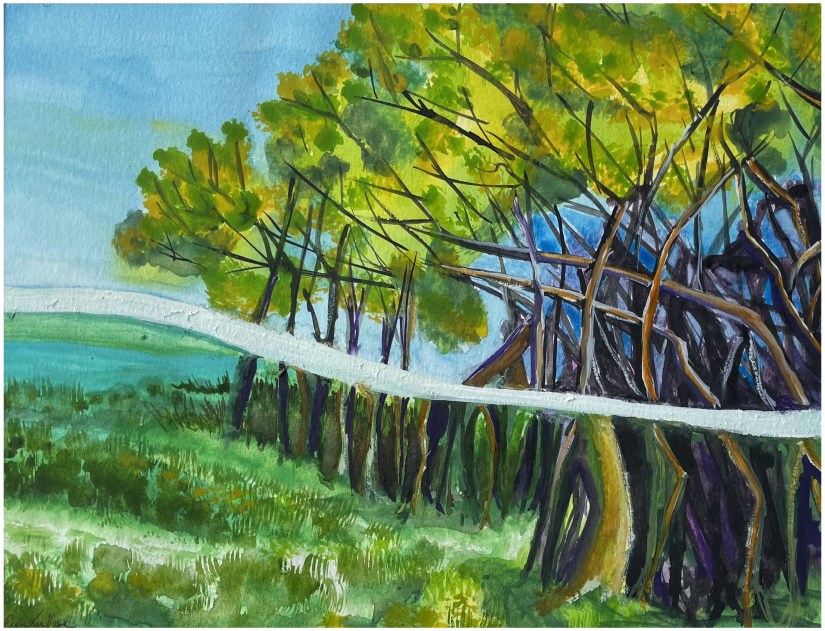
I recently completed my volunteer training to be an aquarium guide at MOTE Marine Laboratory & Aquarium. The training section about mangroves reminded me of this kayaking trip I took last November. I got to kayak through the mangrove tunnels near beautiful shell key preserve. It was an absolutely amazing area that seems even more fantastic now that I know so much more about mangroves!
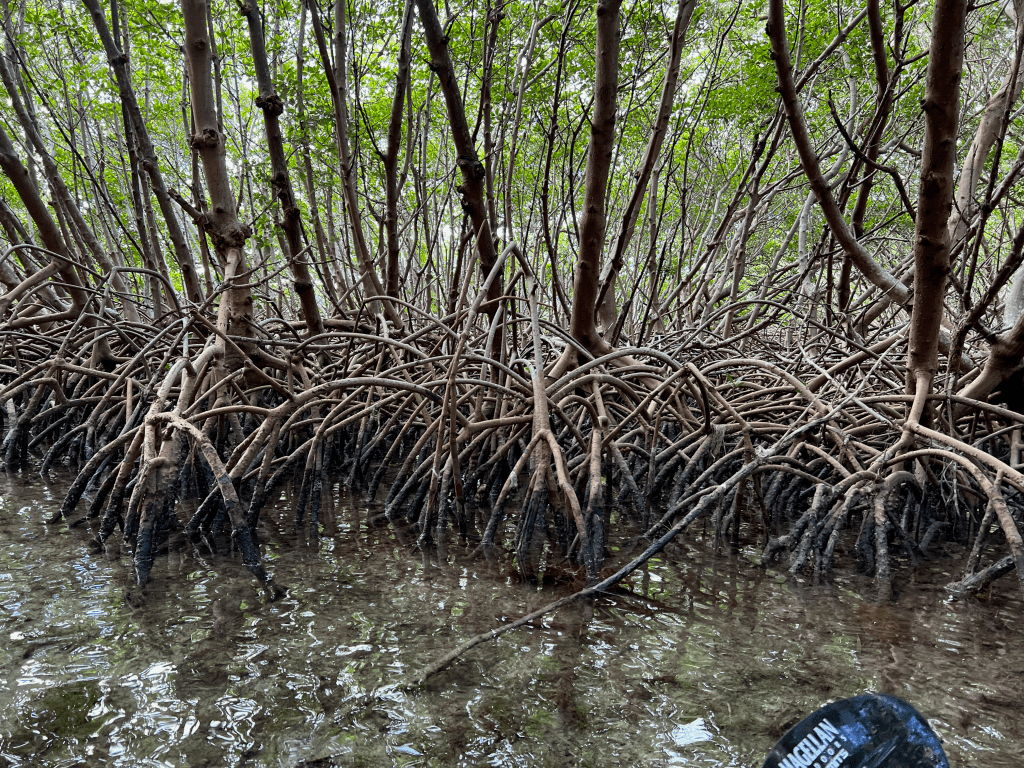
In the image below, you can see the red mangrove prop roots which:
- Stabilize the tree upright and allow it to get air
- Provide critical habitat to the young of almost all the commercial fish we eat and many, many other important aquatic, bird, and reptile species
- Help stabilize the sea floor and prevent erosion
- Provide a buffer for land that breaks and slows wave action.
I always knew mangroves were important, but I honestly didn’t realize just how critically important they actually are!

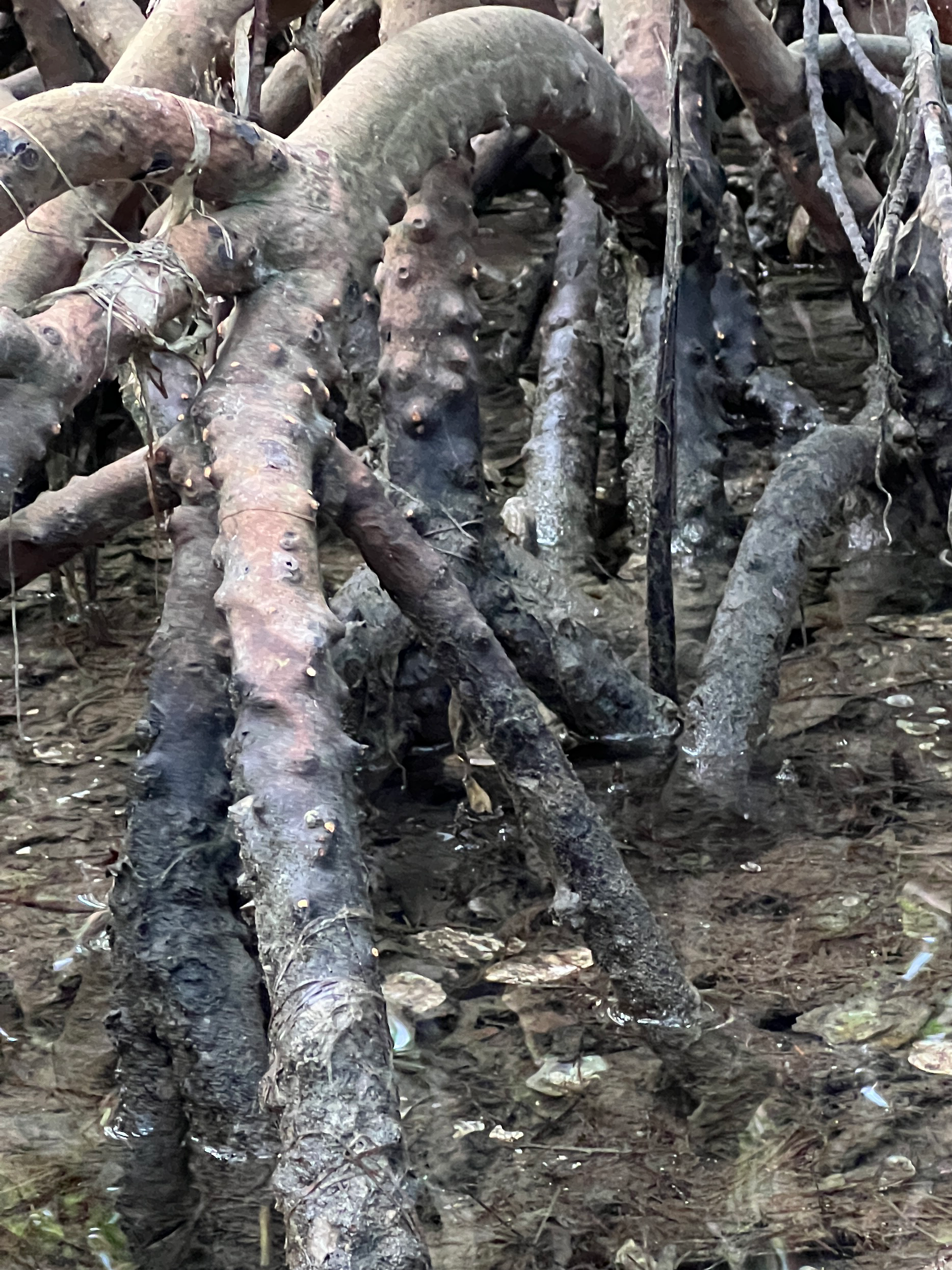
Red mangroves are typically found closest to the water and have some amazing adaptations to survive living in such a salty, permanently submerged location. in the image below you can see the prop roots are covered in bumps with divots at the center – these are called lenticels and are pores that allow gas exchange so the tree gets the oxygen it needs even when mostly submerged.
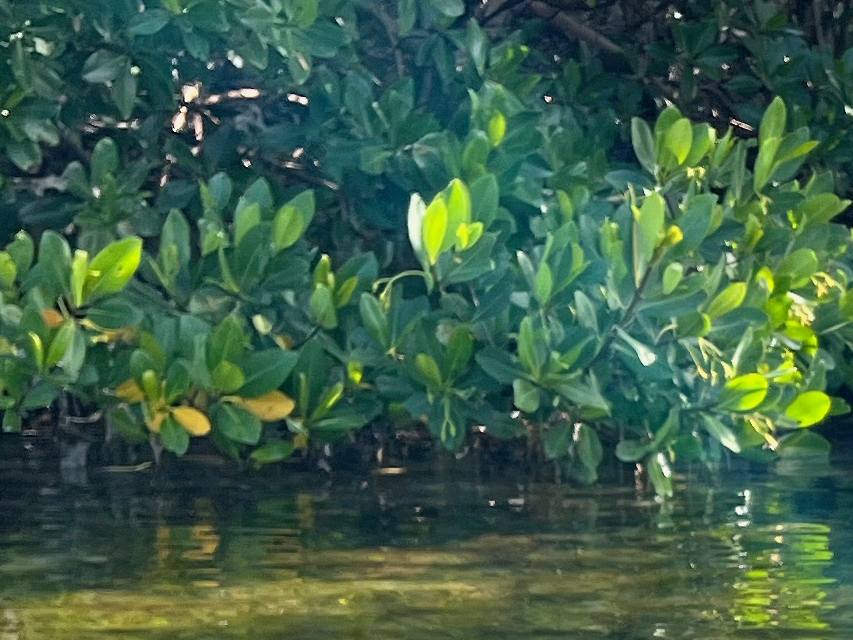
Red mangroves can also be identified by their leaf shape – notice the leaves come to a point whereas the black and white mangroves are ore rounded.
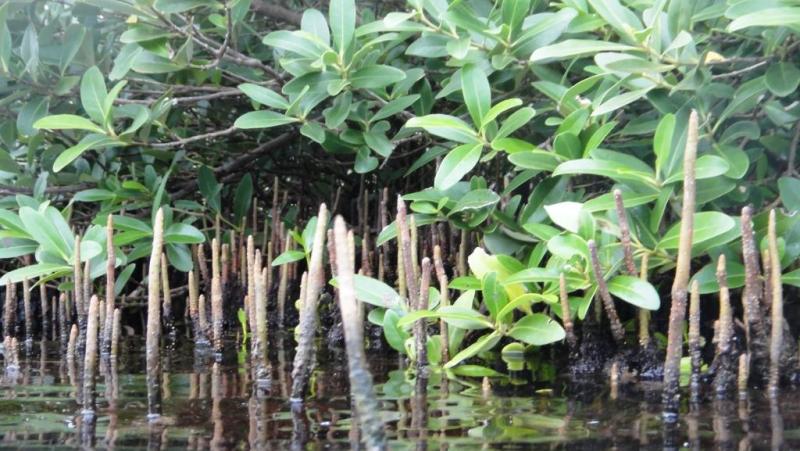
There are two other species of mangrove commonly found in this area; black mangrove and white mangrove. Since White mangroves grow inland, we did not see any while kayaking. We did see a few black mangroves, but didn’t get pictures so I had to borrow from the Government of Bermuda Department of Natural Resources. In the image below, you can see that Black mangroves have a similar means of getting air when they are submerged – they have specialized roots called pneumatophores which allow for gas exchange like the lenticels on red mangrove roots.
The montage recording below captures just a little bit of what we got to see.
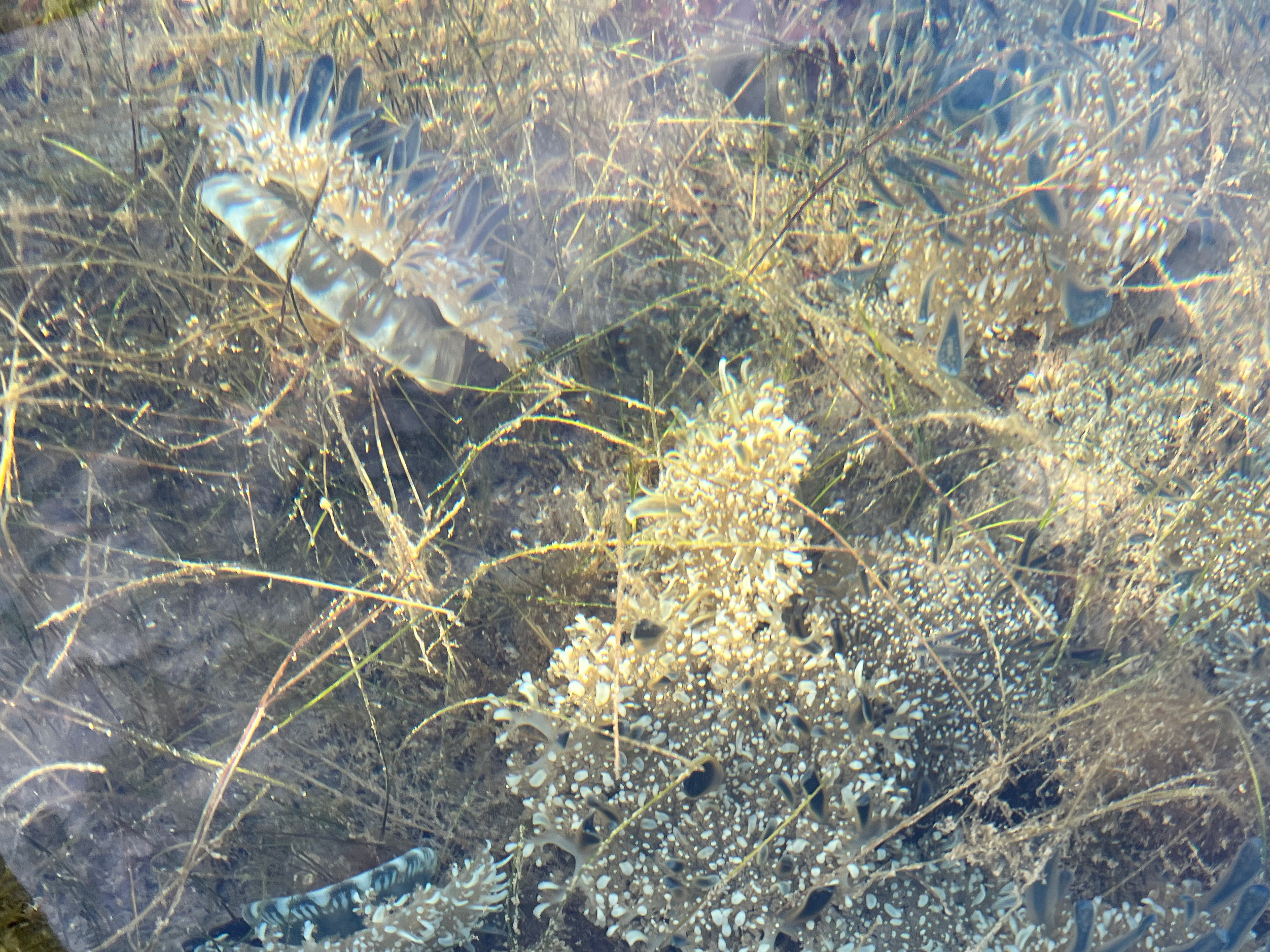
There were a few other highlights as well, including lots and lots of upside-down jellyfish who deliberately float or rest bottom side up to feed. These jellies actually have symbiotic zooxanthellae that provide a large portion of their total nutrition (Gulf Specimen Marine Laboratories).
 Erica Lauer Vose