Biology, Coral Reef Species & Ecology, Research

A Polyphasic Approach to Identify an Unknown Bacterium in the Aiptasia Microbiome

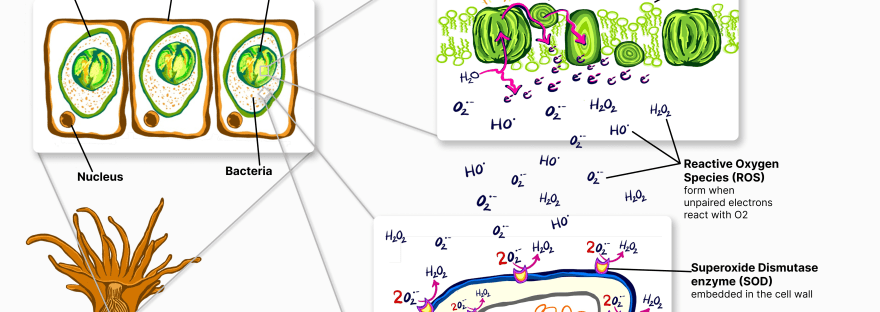
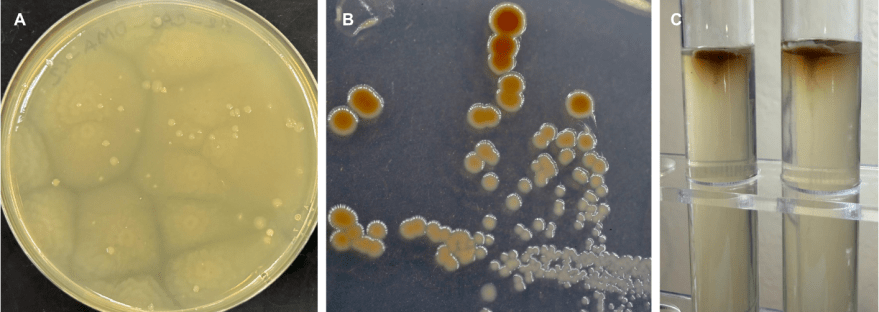
Although the top NCBI matches for the 16S rRNA gene (≥97% identity) were all Tritonibacter mobilis strains, there was some uncertainty in this classification. This uncertainty was largely due to the fact that the isolate exhibited little to no motility, which is inconsistent with reported characteristics of T. mobilis.  Analysis of the SOD gene (≥99% identity) also produced matches primarily to T. mobilis, albeit to a different set of strains than those identified by 16S gene. This supports the conclusion that the isolate is, in fact, T. mobilis, but possibly a new, or previously unnamed strain of T. mobilis.

Biology, Coral Reef Species & Ecology, Research

One USF Undergraduate Research Conference Presentation

I concluded my Independent Research Project this spring at the One USF Undergraduate Research Conference, where I presented my work in an oral session. The presentation went very well, and I had the chance to teach others about coral—one of my favorite topics. You can watch a recorded version of my talk here.

Biology, Research Proposal

Companion Planting Coral: Microbiome Commensalism for Greater Heat Stress Resiliency 

The coral microbiome is a powerful mechanism for resiliency with significant capacity to protect its host from pathogens, parasites, toxins, eutrophic waters, heat stress, and bleaching. This study will investigate whether heat tolerant coral species that retain their beneficial microbiome during a heat stress event can aid less heat tolerant species in recovering beneficial microbiome members via horizontal transmission during or post-heat stress.

Biology, Research

Using the 16S rRNA gene to identify an unknown bacterial sample

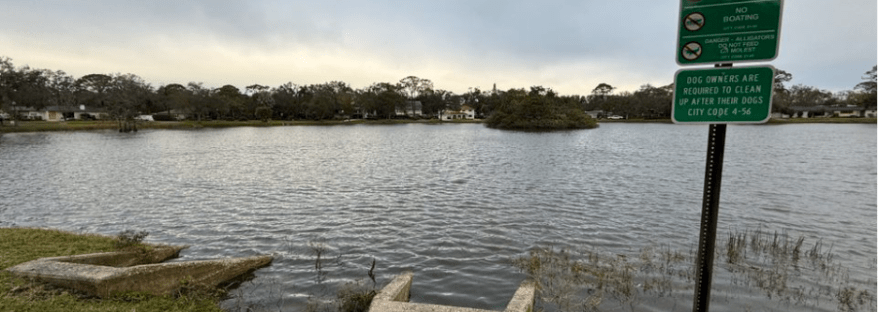
The purpose of this study was to identify a bacterial sample collected from a local storm water reservoir using the 16S rRNA gene to identify it. The genetic sequence was then used to explore the evolutionary relationships of the identified bacteria.  A freshwater sample from Lake Pasadena was cultured, and DNA was extracted from a selected colony. The 16S rRNA gene was amplified via PCR and confirmed by gel electrophoresis (~1500 bp). Sequencing and BLAST analysis identified the bacterium as Acinetobacter johnsonii. Phylogenetic analysis using MEGA11 placed it within a eurytopic group of Gammaproteobacteria, capable of surviving diverse environments. Sub-tree groupings highlight habitat adaptability and catalase activity as a key ecological trait.

Coral Reef Species & Ecology, Research Summary

Are invasive Lionfish affected by population density?

Invasive species are a significant source of biodiversity loss in a given habitat. This is largely because they can quickly reach high population levels and outcompete native individuals. This rapid population growth will usually result in significant, harmful overall impact on ecosystems. This study examines the population density factors of the invasive Indo-Pacific red lionfish… Continue reading Are invasive Lionfish affected by population density?