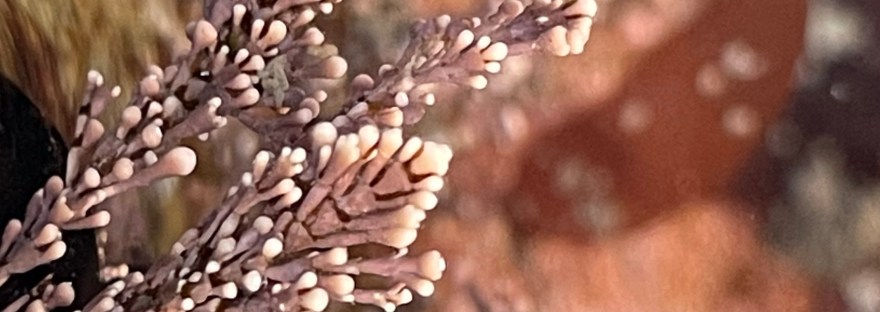

We covered marine primary producers last week in Marine Biology class and the section on red algae reminded me of these fantastic photos I took last time I was out hiking along Rialto beach on the northern coast of Washington state.
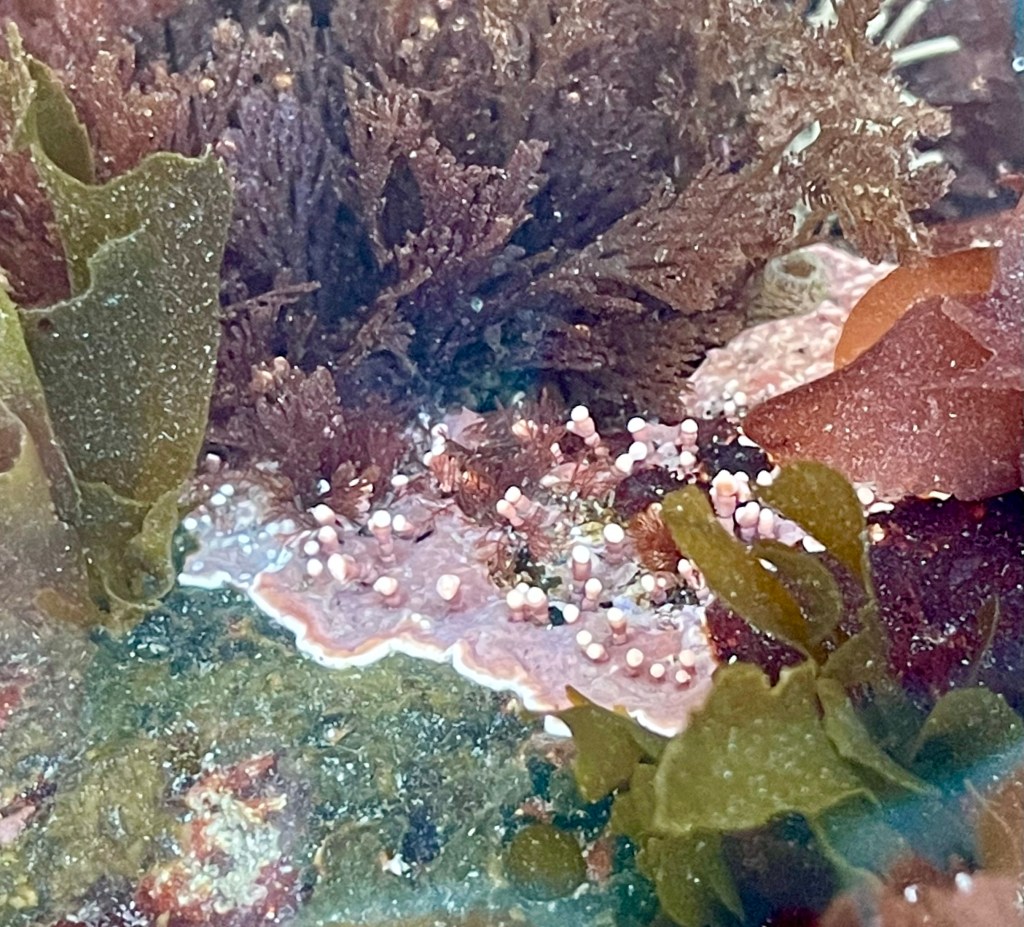
I got out early to catch the low tide and got lucky with a spring tide that left more tide pools uncovered than normal. I was able to get several especially good photos of this coralline algae.
Articulated red coralline algae grows in intertidal and subtidal coastal areas such as the tidepools where these photos were taken. The name “coralline” refers to the fact that these coral deposit calcium carbonate in their cell walls creating a hard outer covering that bears a resemblance to coral. This calcification of the thallus serves primarily to deter most herbivory as the hard material is extremely difficult to bite or chew.
The articulated structure of this organism allows it to bend and flex with wave action and tidal movements. The red color comes from the phycoerythrins (say: fī-kō-ˈer-i-thrən).
In tropical climates, red coralline algae serve as primary reef builders and aid in the process of settlement for juvenile coral species.
In temperate climates, they provide habitat and shelter for invertebrates and burrowing infauna.

Red coralline algae competes with soft fleshy algae for space and resources. Though as ocean acidification makes calcification process more difficult, these algae may have a harder time competing successfully.
Source:
- Monterey Bay Aquarium: https://www.montereybayaquarium.org/animals/animals-a-to-z/red-coralline-alga
- McCoy SJ, Kamenos NA. Coralline algae (Rhodophyta) in a changing world: integrating ecological, physiological, and geochemical responses to global change. J Phycol. 2015 Feb;51(1):6-24. doi: 10.1111/jpy.12262. Epub 2015 Jan 23. PMID: 26986255; PMCID: PMC4964943.
- Marine Biology lectures with Dr. Cassidy Bell
- Introduction to Marine Biology 4th edition. Karleskint, George; Turner, Richard; Small, James. Chapter 7, Multicellular Primary Producers.
 Erica Lauer Vose