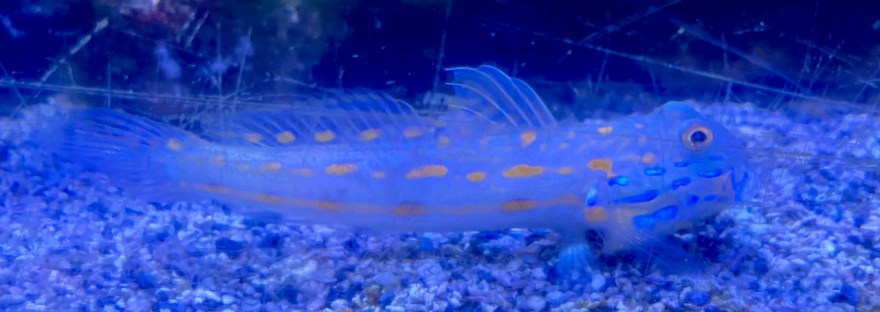
I regularly confuse gobies and blennies, so when I saw this amazing fish at Mote recently, I decided it was time to memorize their ID characteristics. I'm also excited learn a bit more about this goby.
Exploring Marine Ecosystems and Native Plants: Insights from Coral Reefs to Backyard Gardens
I regularly confuse gobies and blennies, so when I saw this amazing fish at Mote recently, I decided it was time to memorize their ID characteristics. I'm also excited learn a bit more about this goby.
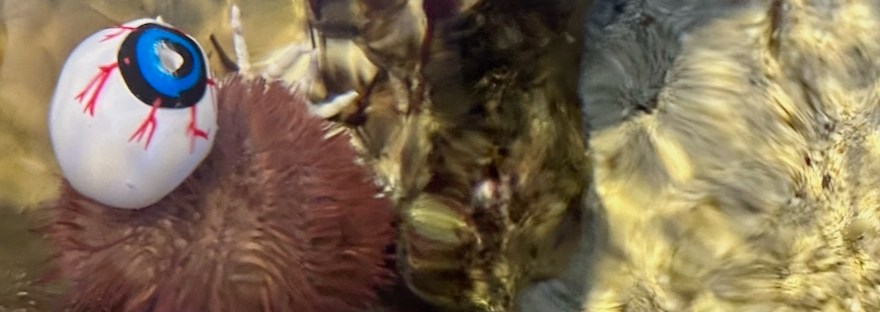
Everyone loves dressing up for Halloween, even the urchins! At Contact Cove, the variegated urchins get little plastic cowboy hats and huge goofy eyeballs to wear. It is hilarious and adorable, but it also encompasses an important behavior trait of these urchins. They like to cover themselves in debris they find in their habitat.
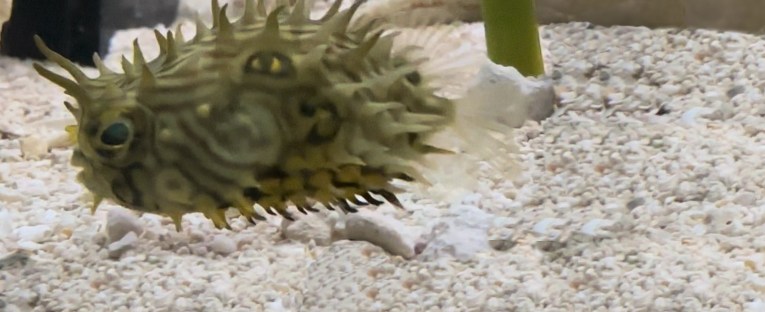
I started watching this little juvenile burrfish in an enclosure off to the side a bit and found that I just couldn't stop- its magnetic! This recording I made was especially good - I caught the burrfish sampling some gravel bits almost as big as its face and nipping at the fins of the much larger squirrelfish which made me laugh out loud.

I had been volunteering at MOTE for a while before I finally saw the calico crab in the grassflats exhibit. This is normal though since these small crabs only grow up to about 3 inches and prefer to bury themselves in the sandy or muddy substrate of their habitat so only their eyes are exposed. This behavior, along with their coloring helps them hide from predators.

Similarly to the calico crab - it took some before I got to see the banded tulip snail who spends most of its time buried in the sand. In addition to hiding strategies, these gastropods can seal their shells with their operculum and use their muscular foot to escape If they feel threatened.
 Erica Lauer Vose