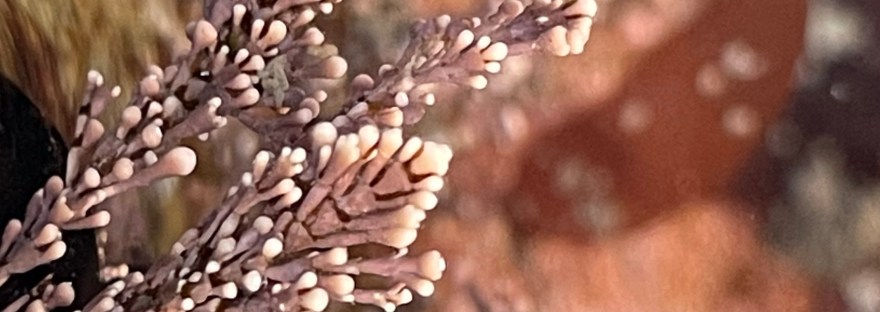
Articulated red coralline algae grows in intertidal and subtidal coastal areas such as the tidepools where these photos were taken. The name "coralline" refers to the fact that these coral deposit calcium carbonate in their cell walls creating a hard outer covering that bears a resemblance to coral. This calcification of the thallus serves primarily to deter most herbivory as the hard material is extremely difficult to bite or chew.
Category: Coastal Wetlands
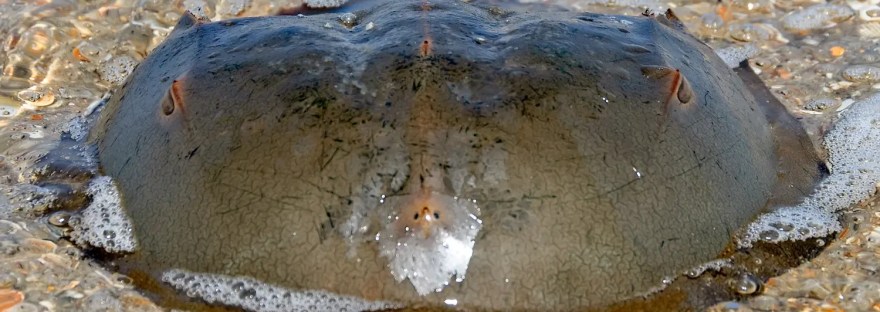
Horseshoe Crabs are amazing!
I am constantly being surprised and delighted by horseshoe crabs! From their funny, bumper car-like walk and tiny, skittery feet to their ancient ancestry and their life-saving medical properties, these creatures are endlessly amazing.
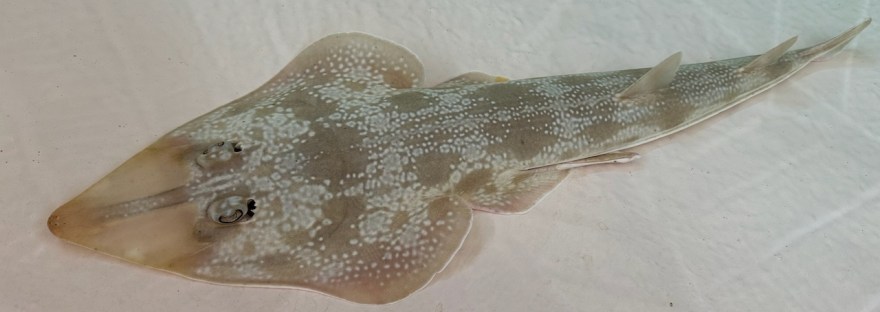
Atlantic Guitarfish and Cownose Stingray interact
One of my absolute favorite things I get to do as a volunteer at MOTE is watch the skate (atlantic guitarfish) and rays and talk to guests about them. Its difficult to avoid anthropomorphizing these adorable creatures. The skate seems particularly charismatic and spends most of his time swimming around the edge of the enclosure… Continue reading Atlantic Guitarfish and Cownose Stingray interact
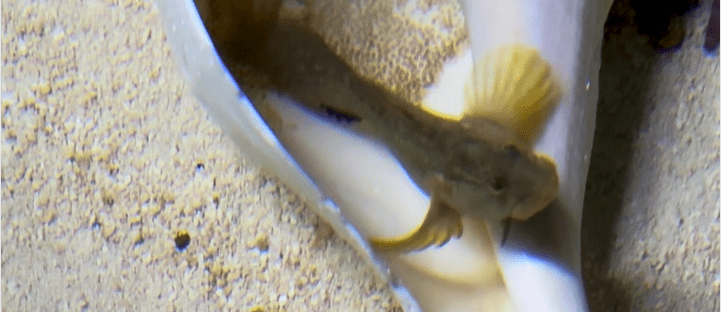
Florida Blenny Guarding Eggs
I've been watching this blenny hiding in its shell in the MOTE grass flats exhibit for a few weeks now when another volunteer mentioned that it's a male guarding eggs. Once I heard that, I had to learn more. Florida blennies live in mangroves, seagrass beds, oyster reefs and rocky intertidal zones. This Florida blenny… Continue reading Florida Blenny Guarding Eggs
Calico Crab
I had been volunteering at MOTE for a while before I finally saw the calico crab in the grassflats exhibit. This is normal though since these small crabs only grow up to about 3 inches and prefer to bury themselves in the sandy or muddy substrate of their habitat so only their eyes are exposed. This behavior, along with their coloring helps them hide from predators.