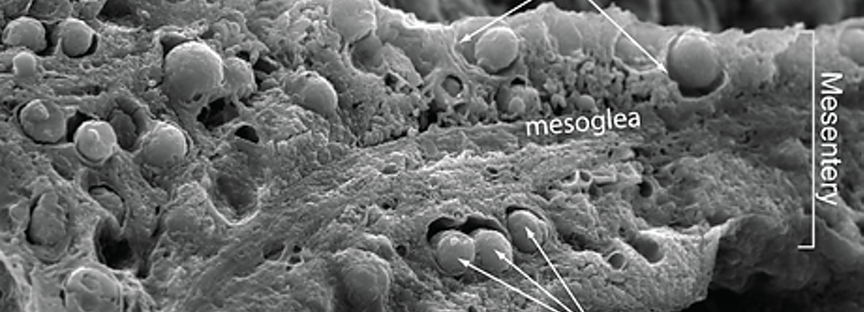
One of the many reasons coral reefs are so remarkable is the symbiotic relationship between the heterotrophic coral species and the unicellular algae most commonly known as "zooxanthellae". The term "zooxanthellae" is used to refer to an enormous and incredibly diverse group of endo-symbionts including many diatoms and dinoflagellates. This is confusing as it generalizes taxonomically diverse symbiotic relationships. The Symbiodinium are part of the Phylum Dinophyta (Dinoflagellates) and the clade Alveolates. Because of the diversity of species and the complexity of clades and taxonomic groupings for these organisms, they are better and more accurately referred to by their genus “Symbiodinium” which encompasses an enormous group of endosymbiotic dinoflagellates.
 Erica Lauer Vose