Rialto beach is a very special place for me. When I can get out there, I like to catch the low tide and hike through Hole-in-the-Rock. We started the 1-mile hike about 2 hours before low tide. Because of the unusually low tides, we got to see many more of the tide pools than we normally would have! Even better, because we got out so early, we got to see the sunrise and have the beach to ourselves for almost the whole hike.
Tag: Biology
Learning about Symbiodinium
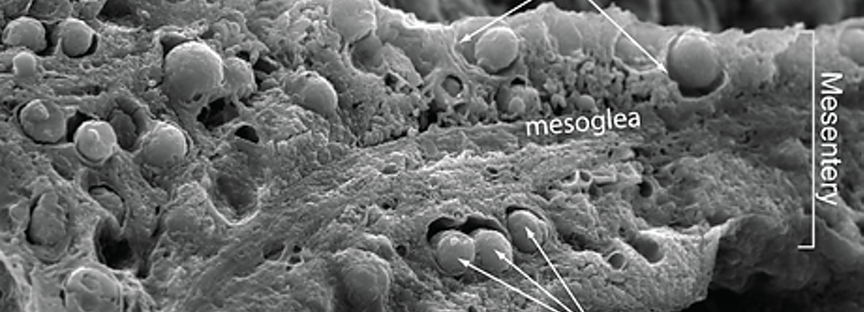
One of the many reasons coral reefs are so remarkable is the symbiotic relationship between the heterotrophic coral species and the unicellular algae most commonly known as "zooxanthellae". The term "zooxanthellae" is used to refer to an enormous and incredibly diverse group of endo-symbionts including many diatoms and dinoflagellates. This is confusing as it generalizes taxonomically diverse symbiotic relationships. The Symbiodinium are part of the Phylum Dinophyta (Dinoflagellates) and the clade Alveolates. Because of the diversity of species and the complexity of clades and taxonomic groupings for these organisms, they are better and more accurately referred to by their genus “Symbiodinium” which encompasses an enormous group of endosymbiotic dinoflagellates.
Citizen Science with Coral Restoration Foundation
Not long after I got certified to scuba dive, I learned about the Coral Restoration Foundation. CRF is a really exciting and amazing organization dedicated to "actively restoring coral reefs on a massive scale, educating others on the importance of our oceans, and using science to further coral research and coral reef monitoring techniques." While… Continue reading Citizen Science with Coral Restoration Foundation
Cleaning stations
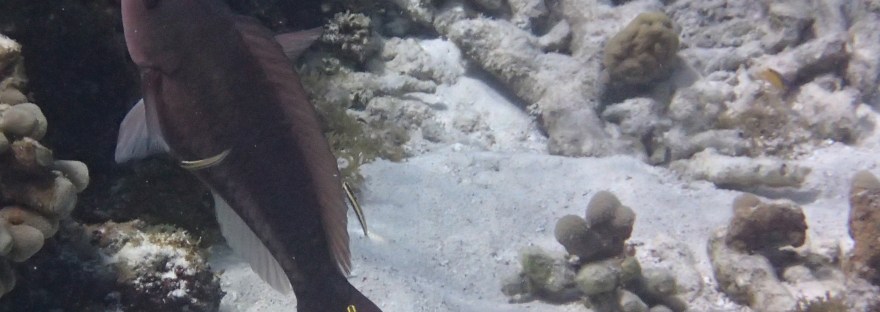
This is an Initial Phase Queen Parrotfish being cleaned (most likely) by juvenile bluehead wrasse and are the best photos we've ever gotten of cleaner fish in action. I learned about this amazing occurrence from a fishinar presentation "Cleaning Stations" given by Ned Deloach (co-author of everyone's favorite fish ID books) that I really began to understand the importance of cleaning stations and the amazing relationships that play out there.
Coral Kindergartens with SECORE International
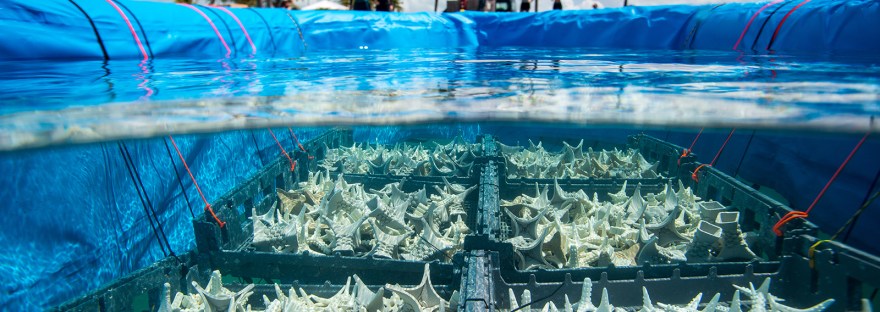
I was deep in a research rabbit hole because I had read that there are some concerns around the idea of coral restoration through nurseries alone. The nurseries often rely on coral organism’s’ ability to reproduce through cloning. A single fragment off of a larger coral can be replanted where it will grow into a new coral individual that is genetically identical to the original coral. If a majority of coral is being raised in nurseries and out-planted from only a few genetic strains, coral populations lose genetic diversity causes all sorts of problems. All this had me wondering, how do coral reproduce?