This month I got to volunteer with SoUL (Stewards of our Urban Lakes) to plant native plants along the shore of my neighborhood lake. SoUL's mission is "to improve water quality and restore the natural habitat of urban lakes through the education and engagement of our communities." SoUL has partnered with the City of St. Petersburg to work on restoring the health of several lakes throughout the city. This month, they were working on the lake a few blocks from where I live so we all got to join in on the fun!
The Coral Bleaching Automated Stress System (CBASS)
In response to the growing need to identify coral genotypes with greater resilience to thermal stress and bleaching, the CBASS system was conceived and developed in order to help identify thermal resilient coral genomes. CBASS is a standardized, low-cost, portable experimental system that uses customizable temperature control and flow-through aquaria to conduct standardized empirical assessments of coral thermal limits.
Helping coral survive climate change using their innate adaptive abilities
This paper gives a substantial and thorough review of existing and evolving intervention methods for coral reef restoration efforts. It specifically focuses on intervention methods that expand coral's natural ability to adapt to small changes in environmental conditions. By expanding these natural abilities, the hope is that we may be able to help coral adapt quickly enough to have a chance at surviving climate change.
Reef Building Coral Presentation
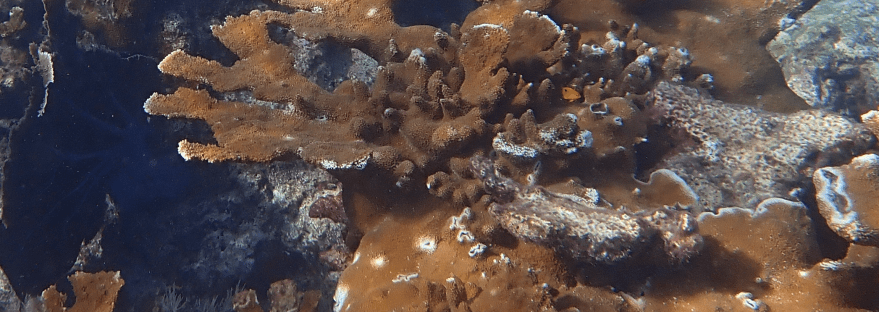
A recent assignment for my Marine Biology class was to present on a chosen marine animal. Obviously, I chose coral. This is a collaborative work with my group members credited in the presentation. You can click through the slides to see what we put together.
Red coralline algae
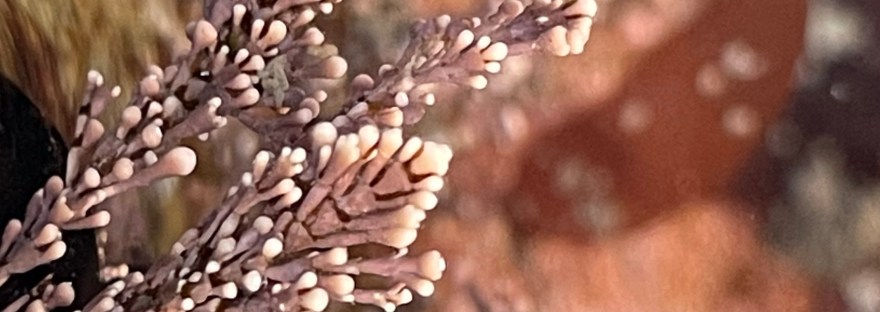
Articulated red coralline algae grows in intertidal and subtidal coastal areas such as the tidepools where these photos were taken. The name "coralline" refers to the fact that these coral deposit calcium carbonate in their cell walls creating a hard outer covering that bears a resemblance to coral. This calcification of the thallus serves primarily to deter most herbivory as the hard material is extremely difficult to bite or chew.