
I concluded my Independent Research Project this spring at the One USF Undergraduate Research Conference, where I presented my work in an oral session. The presentation went very well, and I had the chance to teach others about coral—one of my favorite topics. You can watch a recorded version of my talk here:
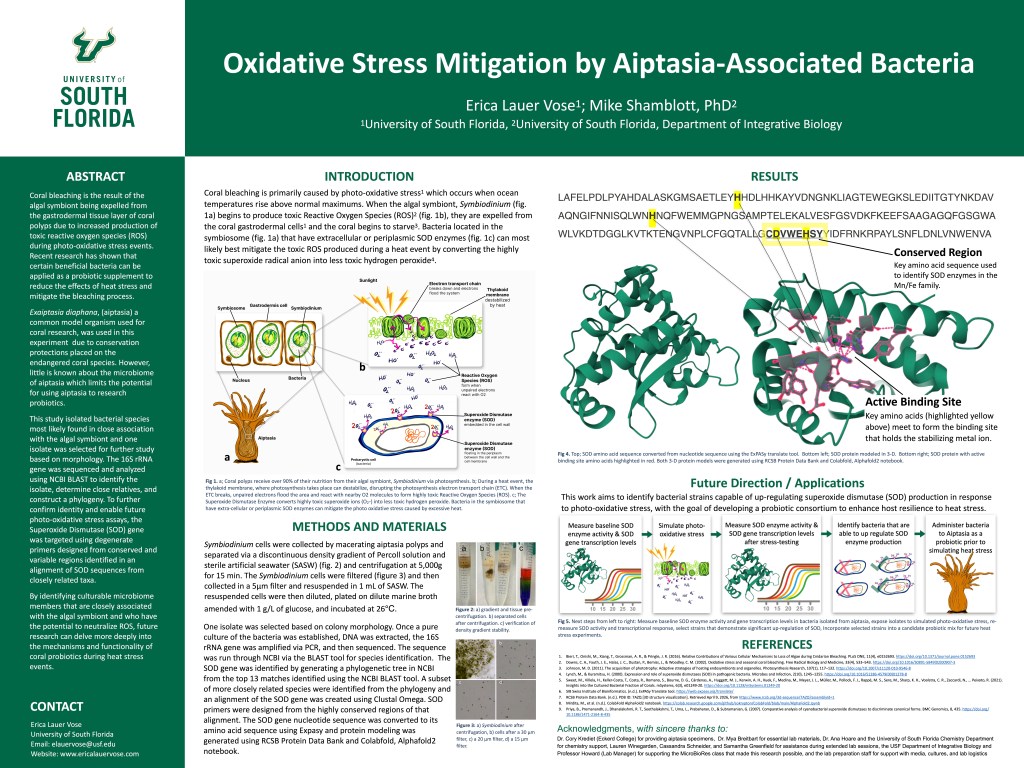
This project began last fall as an ambitious effort to isolate members of the aiptasia microbiome and evaluate them for potential probiotic properties. However, I quickly realized I needed to scale the project back to something more feasible—something I could meaningfully complete within a single undergraduate semester. I ultimately refined the scope to focus on a single bacterial isolate, with the goal of measuring Superoxide Dismutase (SOD) enzyme activity before and after exposure to simulated photo-oxidative stress.
And yes—if you’re thinking, “this is scaled back?”—you’re not wrong. I’ve never been accused of thinking too small.
Even with that narrower scope, the project proved more technically complex than I initially expected. What followed was a crash course in just how challenging that goal really was—quantitative enzymatic assays, in particular, are surprisingly tricky, especially when working with environmental systems. While I didn’t obtain usable results from the SOD activity assays, the project became an opportunity to build a strong foundation in key techniques.
Along the way, I developed practical experience establishing pure cultures of environmental bacteria, refining bacterial identification beyond 16S rRNA, locating genes even when they aren’t well annotated in NCBI databases, and exploring protein modeling techniques—just to name a few areas.
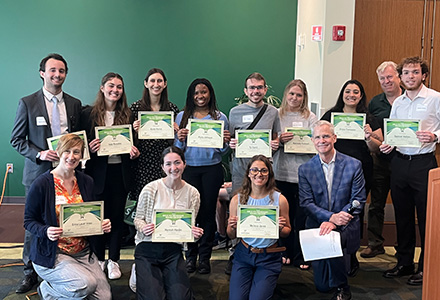
The accompanying poster for this project—was recognized with a “Best of” award at the conference, which was an exciting and affirming way to close out the experience.
Abstract
Coral bleaching is the result of the algal symbiont being expelled from the gastrodermal tissue layer of coral polyps due to increased production of toxic reactive oxygen species (ROS) during photo oxidative stress events. Recent research has shown that certain beneficial bacteria can be applied as a probiotic supplement to reduce the effects of heat stress and mitigate the bleaching process. Exaiptasia diaphana (aiptasia), a common model organism used for coral research, was used in this experiment due to conservation protections placed on the endangered coral species. However, little is known about the microbiome of aiptasia which limits the potential for using aiptasia to research probiotics. This study isolated bacterial species most likely found in close association with the algal symbiont and one isolate was selected for further study based on morphology. The isolate was identified as a strain of Tritonibacter mobilis in NCBI using the 16S rRNA gene. To further confirm identity and enable future photo-oxidative stress assays, the Superoxide Dismutase (SOD) gene was located using degenerate primers designed from conserved and variable regions identified in an alignment of SOD sequences of closely related taxa. The SOD gene located in this strain of T. mobilis was identified as belonging to the Mn/Fe SOD gene family. By identifying culturable microbiome members that are closely associated with the algal symbiont and who have the potential to neutralize ROS, future research can delve more deeply into the mechanisms and functionality of coral probiotics during heat stress events.

